
Most of us have been conditioned to believe that growth, in any meaningful domain like mindset, business, or wealth, arrives exclusively through relentless pushing, forcing, and an almost brutal level of striving. We see the hustle culture celebrated, the 18-hour workdays lionised. Yet, what if this common notion of achieving growth through allowing is not only more effective but also far more sustainable? The aggressive approach often leads to burnout, not breakthrough, masking an underlying fear rather than empowering genuine progress. It’s time to interrogate this pervasive belief and consider an alternative way to cultivate substantial, lasting expansion.
This isn’t about passivity; it’s about discerning the difference between purposeful action and desperate exertion. There’s a quiet strength in understanding when to apply effort and when to step back, observing where energy flows most freely. True growth isn’t a battle to be won; it’s an evolution to be facilitated. When you force, you create resistance. When you allow, you open a channel. Real scalability comes not from brute force, but from intelligent design and alignment with natural principles, something often overlooked in our chase for quick wins.
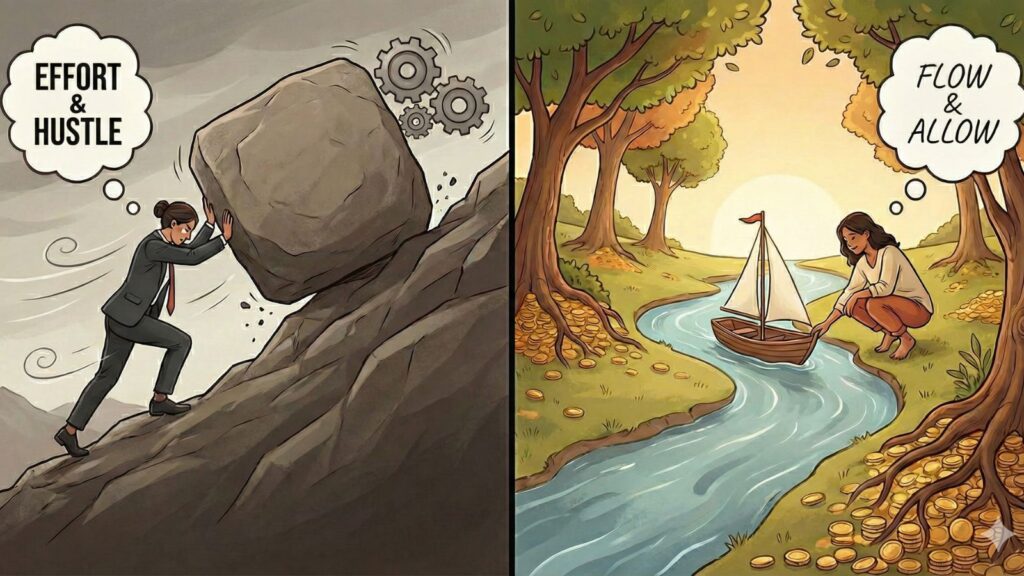
The Illusion of Force: Why More Effort Doesn’t Always Mean More Growth
Consider the typical advice given for scaling a business or increasing income: work harder, cold call more, network aggressively, push through the brick walls. While effort is undeniably a component of success, the emphasis on brute force often misses the point entirely. Incremental gains from sheer willpower are finite and exhausting. You can only work so many extra hours; your physical and mental capacity has limits. This constant fight depletes resources instead of expanding them.
The problem with a force-based approach is its inherent unsustainability. It treats growth like a debt to be repaid through suffering. This mindset conditions us to believe that struggle is a prerequisite for achievement, rather than a potential byproduct of misdirection. It ignores the fundamental truth that systems, whether biological or organisational, thrive when resources are optimally allocated, not merely maxed out. For an alternative perspective on effort and reward, consider the profound insights into sustainable productivity offered by organisations like Harvard Business Review, which often highlight balance over sheer volume.
Redefining ‘Hard Work’ for True Expansion
Hard work isn’t about the number of hours you put in; it’s about the quality and effectiveness of those hours. There’s a significant difference between working hard on the right things and simply working hard on everything. Many confuse busyness with productivity. Genuine growth requires strategic focus, often less action, but more deliberate action.
When you shift from forcing to allowing, you’re not abandoning effort. You’re redirecting it. You’re moving from a state of fighting against resistance to identifying and flowing with opportunities. It’s the difference between trying to paddle upstream in a flood and finding the calmer current that takes you further with less energy expenditure. This paradigm shift is critical for anyone looking to build genuine, scalable success beyond the initial burst of adrenaline.
Embracing Allowing: Cultivating Conditions for Organic Expansion

If growth isn’t solely about forcing, what does ‘allowing’ actually entail? It means creating the optimal conditions for growth to occur naturally, much like a gardener cultivates a rich soil and the right climate for a seed to sprout. Allowing is about smart systems, clear intention, and trusting iterative processes. It’s about building a foundation that can hold expansion, rather than simply trying to inflate something fragile.
For example, in business, allowing might mean investing in automation to free up your most valuable resource (your time) for strategic tasks. It could involve delegating effectively, building robust teams, or refining your product or service until it naturally attracts clientele rather than requiring aggressive sales tactics. In wealth building, it means understanding market cycles and making informed, patient decisions, not chasing every speculative trend with frantic trading. The principles are similar across all domains: create fertile ground, plant wisely, and then trust the process, stepping in only to nurture, not to command every single element.
The Power of Alignment for Growth Through Allowing
Alignment is the cornerstone of allowing. When your actions, intentions, and values are aligned, you naturally attract opportunities that resonate with you. This isn’t some mystical ‘manifestation’ theory; it’s grounded psychology. When you’re clear on your purpose and values, you make better decisions, communicate more authentically, and your energy is coherent. People are drawn to coherence.
- Mindset Alignment: Your beliefs about what’s possible directly impact your actions. Shift from a scarcity mindset to an abundance mindset, not as an affirmation, but as a practical framework for how you view resources and opportunities.
- Business Alignment: Does your business model truly serve your ideal client? Are your operations streamlined? Is your team motivated and empowered? Disjointed systems drain energy and inhibit natural growth. For a deeper dive into the importance of alignment in various professional settings, exploring works on organisational psychology can be highly beneficial, such as those found on The American Psychological Association’s website.
- Wealth Alignment: Are your investments aligned with your risk tolerance and long-term goals? Are your spending habits in sync with your financial aspirations? Misalignment here creates constant friction and often leads to self-sabotage in financial matters.
When these elements are aligned, your efforts become far more potent. You spend less time correcting course and more time moving forward. It’s like sailing with the wind instead of against it; the journey becomes smoother, faster, and far more enjoyable.
Overcoming the Fear of Letting Go
The biggest hurdle to embracing growth through allowing is often fear. We fear that if we stop forcing, everything will fall apart. We mistake control for influence. This fear is deeply ingrained, often stemming from early experiences where effort was directly correlated with reward, regardless of method. Breaking free from this conditioning requires a conscious decision to trust in a different kind of power—the power of intelligent design and natural flow.
It’s an uncomfortable paradox for many: the more you try to control every variable, the less control you often have over the overall outcome. When you micro-manage, you stifle ingenuity and autonomy. When you create rigid plans without room for adaptation, you become brittle and break under pressure. Allowing, conversely, suggests a level of trust in processes, in others, and in your own capacity to adapt and respond rather than react frantically.
Practical Steps to Cultivate Allowing
Transitioning from forcing to allowing isn’t a passive surrender; it’s an active, deliberate shift in strategy and mindset. It requires ongoing practice. Here are a few practical ways to start cultivating allowing in your life:
- Audit Your Efforts: Honestly assess where you are expending the most energy. Is it on high-leverage activities, or are you constantly fire-fighting and trying to control things outside your direct influence? Eliminate or delegate the latter.
- Define Your Values and Vision: Get crystal clear on what you truly want and why. When your ‘why’ is strong and clear, the ‘how’ often flows more easily because your actions are guided by purpose. Check out Psychology Today Australia for articles on defining personal values.
- Practise Detachment from Outcome: Do your best with intelligence and integrity, then release the need to control the exact outcome. This doesn’t mean you don’t care; it means you trust that you’ve laid the best possible groundwork and are open to how the universe responds.
- Build Systems, Not Just Tasks: Understand that sustainable growth comes from repeatable, optimised systems, not just a series of individual tasks. Invest time in creating these systems, then trust them to do the heavy lifting.
These actions, whilst requiring initial effort and focus, ultimately lead to a less strenuous path towards growth. They are investments in long-term efficacy, rather than short-term bursts of unsustainable energy. This isn’t about being lazy; it’s about being profoundly intelligent with your most precious resources: time and energy.

The Enduring Power of Growth Through Allowing
The notion of growth isn’t about abandoning effort, but about refining it. It’s a call to move beyond the shallow rewards of constant battle and into the profound satisfaction of conscious creation. When you cease fighting against your circumstances and begin to align with your deepest intentions, you unleash a far more powerful, enduring kind of expansion. This approach leads not only to greater external success but also to an inner sense of peace and accomplishment that relentless forcing can never offer. Embrace the intelligence of allowing, and watch your world expand with a grace and ease you never thought possible.


 Sunny Peters